
GHK-Cu Peptide: Research Applications, Properties, and Scientific Interest
What Is GHK-Cu?
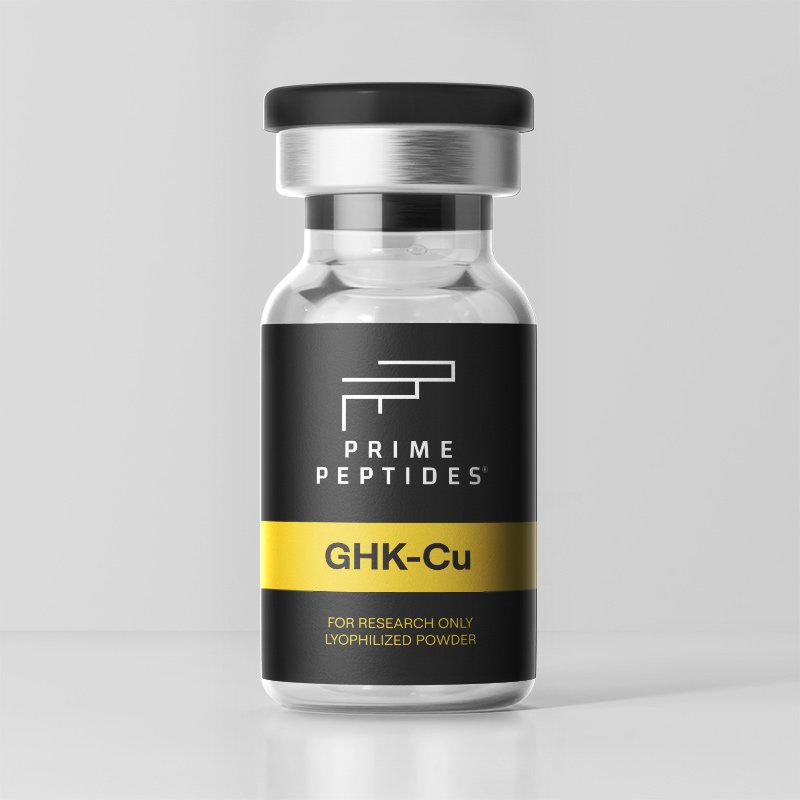
GHK-Cu, also known as Copper Peptide GHK-Cu, is a naturally occurring tripeptide complex composed of glycine, histidine, lysine, and a copper ion. First identified in human plasma, this peptide has become a significant focus of scientific research due to its potential role in cellular signaling, tissue regeneration, and biological maintenance processes.
As individuals age, natural levels of GHK-Cu tend to decline. This observation has prompted researchers to investigate how the peptide interacts with various biological pathways and whether it may contribute to cellular function, tissue repair mechanisms, and overall physiological health. Today, GHK-Cu remains one of the most extensively studied peptides in regenerative and anti-aging research.
Understanding the Structure of GHK-Cu
GHK-Cu consists of the amino acid sequence glycyl-L-histidyl-L-lysine bound to copper. This unique structure enables the peptide to transport copper ions throughout biological systems, where copper plays a critical role in numerous enzymatic and cellular processes.
Researchers believe that the peptide’s ability to bind and deliver copper contributes significantly to its biological activity. Through this mechanism, GHK-Cu has demonstrated potential involvement in wound healing, tissue remodeling, and cellular communication in various laboratory studies.
How Does GHK-Cu Work?
Scientific investigations suggest that GHK-Cu functions as a signaling peptide. Rather than acting directly on tissues, it may influence cellular behavior by regulating gene expression and promoting communication between cells.
Research indicates that GHK-Cu may support:
- Cellular regeneration processes
- Tissue remodeling mechanisms
- Collagen synthesis pathways
- Antioxidant activity
- Maintenance of healthy skin structures
- Cellular repair signaling
These characteristics have made GHK-Cu a valuable compound in studies examining aging, tissue recovery, and regenerative biology.
Potential Research Benefits of GHK-Cu
Support for Collagen Production
One of the most widely researched properties of GHK-Cu is its potential influence on collagen synthesis. Collagen is an essential structural protein responsible for maintaining the strength, elasticity, and integrity of connective tissues.
Laboratory studies suggest that GHK-Cu may encourage the production of collagen and other extracellular matrix components. This has contributed to growing scientific interest in the peptide’s role within tissue regeneration research.
Interest in Skin Health Research
GHK-Cu has become a prominent subject in dermatological studies due to its potential impact on skin-related biological processes. Researchers have investigated its effects on skin remodeling, cellular turnover, and the maintenance of healthy tissue structures.
Studies suggest that GHK-Cu may help support biological mechanisms associated with skin renewal and tissue maintenance, making it a commonly examined peptide in cosmetic and regenerative research.
Antioxidant Properties
Oxidative stress is a major focus in aging and cellular health research. Free radicals can contribute to cellular damage and affect normal biological function over time.
Research indicates that GHK-Cu may possess antioxidant characteristics that help support the body’s natural defense systems against oxidative stress. These findings continue to attract interest from scientists studying age-related biological changes.
Tissue Repair and Regeneration Research
GHK-Cu has been extensively studied for its potential role in tissue repair mechanisms. Researchers have explored how the peptide may influence wound-healing pathways, cellular migration, and tissue remodeling processes.
While further investigation remains necessary, existing research has highlighted the peptide’s potential importance in regenerative science.
Why Researchers Are Interested in GHK-Cu
Broad Biological Activity
Unlike some peptides that target a single pathway, GHK-Cu appears to influence multiple biological systems. Researchers have identified effects related to gene expression, tissue maintenance, antioxidant defense, and cellular communication.
This broad range of activity makes GHK-Cu a particularly attractive compound for ongoing scientific investigation.
Naturally Occurring Peptide
Another reason for the growing interest in GHK-Cu is its natural presence within the human body. Because it occurs naturally in plasma, saliva, and urine, researchers view it as an important component of normal physiological processes.
Its endogenous origin has contributed to extensive studies examining how declining levels may relate to aging and tissue function.
GHK-Cu and Anti-Aging Research
The relationship between GHK-Cu and healthy aging remains a major area of scientific exploration. Researchers have observed that natural GHK-Cu concentrations decrease with age, leading to investigations into its potential involvement in age-related biological processes.
Current research focuses on how GHK-Cu may influence:
- Cellular maintenance
- Skin appearance
- Tissue regeneration
- Collagen support
- Antioxidant defense mechanisms
- Healthy cellular communication
Although research findings continue to evolve, GHK-Cu remains one of the most discussed peptides in regenerative and longevity science.
Quality Considerations for GHK-Cu Research
Researchers seeking GHK-Cu for laboratory applications often prioritize product quality and purity. High-quality research-grade peptides should be manufactured according to strict standards and accompanied by analytical documentation.
Important quality indicators include:
- High purity levels
- Third-party testing
- Batch-specific analysis
- Proper storage conditions
- Reliable manufacturing practices
These factors help support consistency and accuracy within research environments.
Conclusion
GHK-Cu is a naturally occurring copper-binding peptide that has gained significant attention in regenerative, dermatological, and anti-aging research. Its potential involvement in collagen production, tissue repair, antioxidant activity, and cellular communication has made it one of the most extensively studied peptides in modern scientific literature.
As interest in peptide science continues to grow, GHK-Cu remains a valuable focus for researchers exploring mechanisms related to tissue maintenance, cellular health, and biological aging. Ongoing investigations will continue to expand our understanding of this remarkable peptide and its potential role in future scientific discoveries.