

How Much Retatrutide Should I Take Per Week? Understanding Research, Dosage Studies, and Safety
What Is Retatrutide?
Retatrutide is an investigational peptide being studied for its potential effects on metabolism, weight management, and related biological pathways. It is a multi-receptor agonist designed to interact with pathways associated with glucagon-like peptide-1 (GLP-1), glucose-dependent insulinotropic polypeptide (GIP), and glucagon receptors.
Because of its unique mechanism, retatrutide has attracted significant attention in metabolic research. However, it is important to understand that retatrutide is still being evaluated in clinical studies and is not currently an approved treatment option in many regions. Any discussion about dosage should be based on scientific research protocols rather than personal use recommendations.
Retatrutide Weekly Dosage: What Research Studies Explore
One of the most common questions surrounding retatrutide is: “How much retatrutide should I take per week?”
In clinical research, scientists evaluate different dose levels to understand how the compound affects the body, including its effectiveness, tolerability, and safety profile. These studies generally involve carefully controlled dosing schedules where participants are monitored by medical professionals.
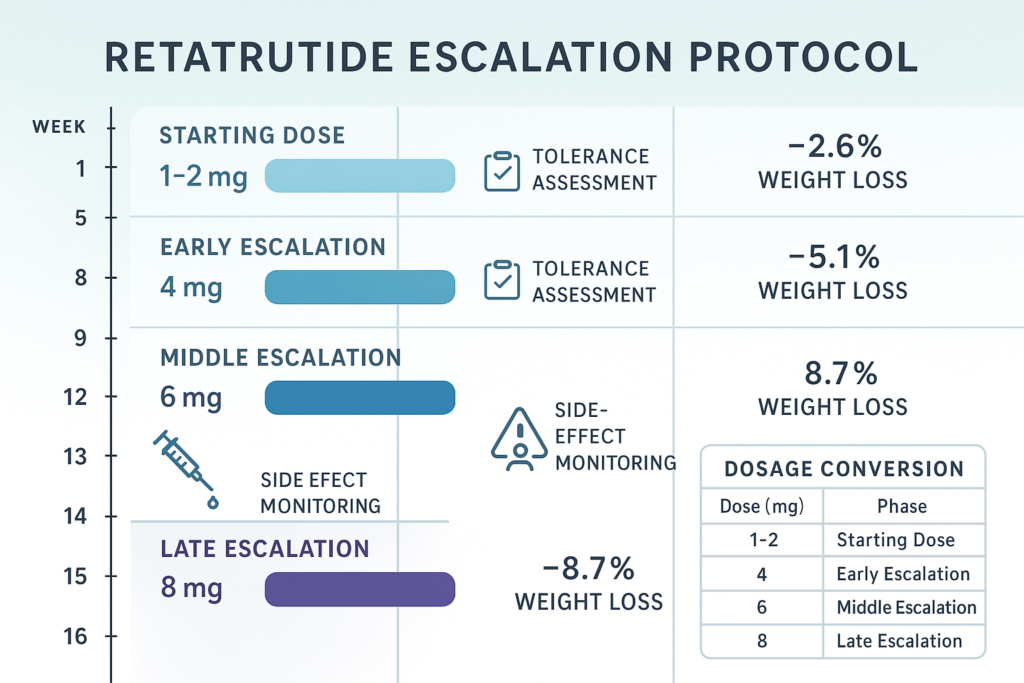
Research trials have explored various weekly dose ranges, gradually increasing amounts over time to assess how the body responds. This gradual approach helps researchers evaluate potential side effects and determine appropriate dosing strategies for future medical applications.
It is important to note that research trial dosages are not instructions for individual use. They are part of controlled scientific investigations.
How Is Retatrutide Studied in Clinical Research?
Gradual Dose Escalation
A key feature of peptide research studies is gradual dose adjustment. Researchers often begin with lower amounts and increase exposure over a specific period.
This method helps scientists understand:
- How the body responds to the peptide
- Whether side effects occur
- How different doses influence biological markers
- The relationship between dose and effectiveness
Dose escalation is designed for controlled research environments and should not be interpreted as a personal dosing guide.
Factors That Influence Retatrutide Research Outcomes
Individual Biological Differences
Everyone’s body responds differently to biologically active compounds. Factors such as metabolism, overall health, genetics, and existing medical conditions can influence how a compound interacts with the body.
Research Goals
The purpose of a study can affect the dosing approach. Researchers may evaluate different amounts depending on whether they are studying metabolic pathways, weight-related outcomes, glucose regulation, or other biological effects.
Monitoring and Safety Evaluation
Clinical research includes regular monitoring to track participant responses. Scientists collect data on effectiveness, tolerability, and potential risks before any compound can be widely approved.
What Are Researchers Studying Retatrutide For?
Weight Management Research
Retatrutide has gained attention because researchers are investigating its potential role in regulating appetite, energy balance, and body weight-related pathways.
Studies are examining how activating multiple hormone receptors may influence metabolic function compared with compounds that target fewer pathways.
Metabolic Health Research
Scientists are also exploring retatrutide’s relationship with glucose metabolism and energy regulation. Multi-pathway peptides represent an emerging area of research focused on understanding complex metabolic processes.
Future Peptide-Based Therapies
The development of retatrutide highlights the growing interest in advanced peptide-based approaches. Researchers continue investigating how targeted molecules can interact with specific biological systems.
Potential Side Effects Studied With Retatrutide
As with many investigational compounds, researchers closely monitor safety during clinical trials. Reported effects in studies may vary depending on the dose, duration, and individual response.
Areas researchers monitor include:
- Digestive system responses
- Changes in appetite
- Tolerability at different dose levels
- General health markers
Because retatrutide is still under investigation, more research is needed to fully understand its long-term safety profile.
Why You Should Follow Scientific Research Instead of Online Dosage Advice
Online discussions about peptides often include personal experiences and unofficial recommendations. However, these sources may not reflect clinical evidence or account for important safety factors.
Reliable peptide research should always be based on:
- Peer-reviewed scientific studies
- Verified clinical trial information
- Professional medical guidance
- Proper regulatory standards
Following unsupported dosing information can create unnecessary risks, especially with compounds that are still being studied.
The Future of Retatrutide Research
Retatrutide represents an exciting development in peptide science and metabolic research. Its ability to target multiple hormone pathways has made it a major focus of ongoing scientific investigation.
Future studies will continue evaluating its potential benefits, safety considerations, and possible applications. As research progresses, scientists will gain a clearer understanding of how retatrutide may contribute to future metabolic therapies.
Conclusion: Understanding Retatrutide Weekly Dosage Research
The question “How much retatrutide should I take per week?” does not have a simple answer outside of controlled research settings. Retatrutide dosing is currently studied through carefully designed clinical trials that evaluate different amounts, responses, and safety factors.
While early research has generated interest in this peptide, it remains an investigational compound. Staying informed through scientific research and approved medical guidance is essential for understanding its potential role in the future of metabolic health and peptide-based therapies.